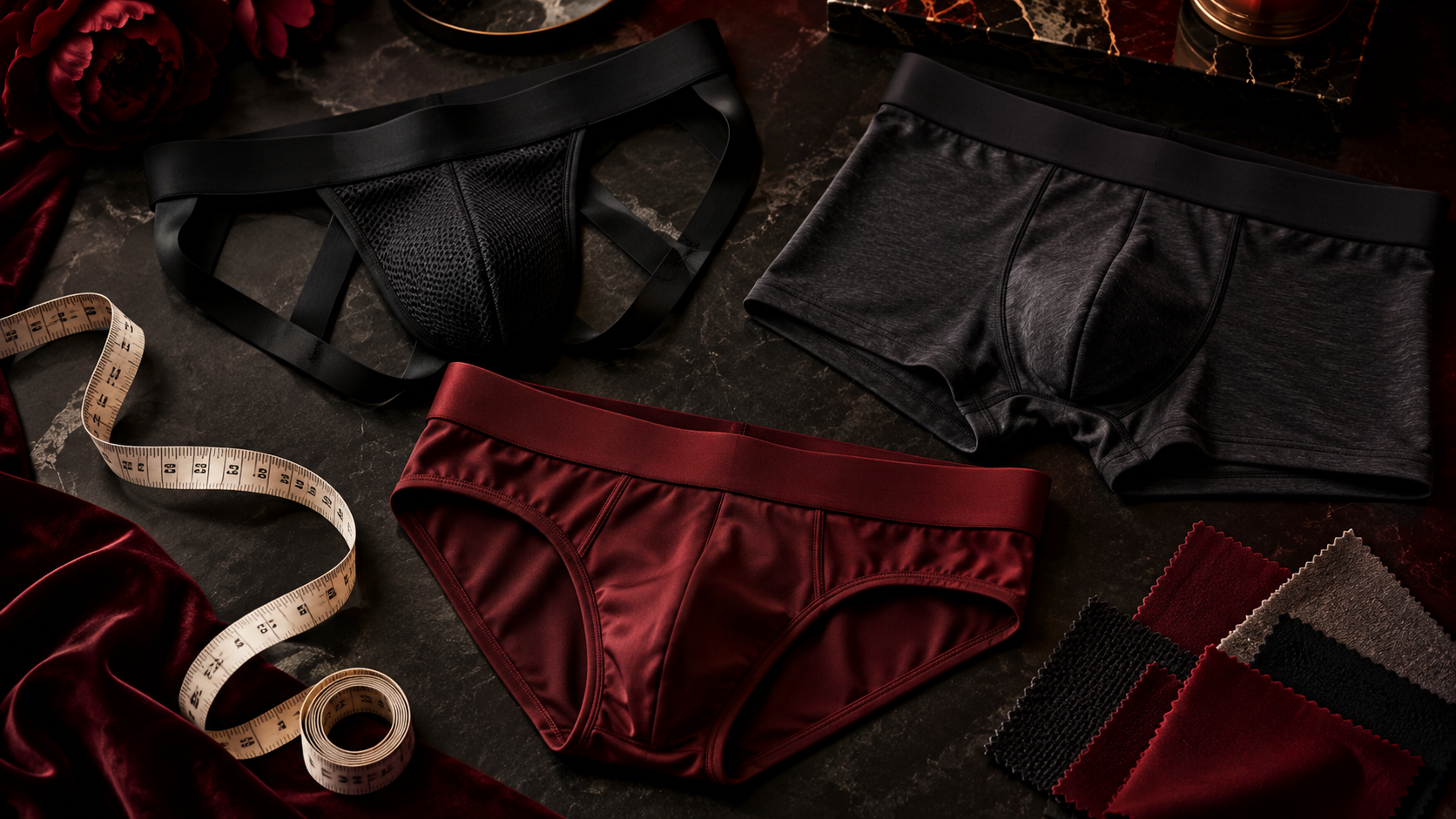
Cotton is breathable and straightforward. Modal tends to feel softer and drapier. Microfiber often feels sleek, smooth, and performance-oriented. The right pick depends on whether you prioritize natural feel, softness, or a more technical finish.
Fabric is the difference between underwear you tolerate and underwear you crave. Cotton, modal, and microfiber each bring a different mood to the drawer.
| Fabric | How it feels | Best for | Potential downside |
|---|---|---|---|
| Cotton | Familiar, breathable, natural | Everyday basics and people who like a traditional feel | Can feel less silky and may hold moisture longer than performance fabrics |
| Modal | Soft, smooth, drapey, often luxurious | People who want comfort with a more elevated handfeel | Can require gentler care to stay looking great |
| Microfiber | Slick, lightweight, often very stretchy | Gym-adjacent comfort, smooth looks, and lower-friction wear | Some people dislike the more synthetic feel |
Why cotton still earns drawer space
Cotton is the old reliable. It feels familiar, breathable, and unfussy, which is exactly why many people keep reaching for it. When the knit is good and the cut is right, cotton can feel clean, easy, and all-day wearable without drama.
What cotton is not, usually, is especially silky. If you want that "did I just put on something expensive?" feeling, cotton may not always deliver it on texture alone.
Why modal feels so seductive
Modal often feels like the fabric that whispers luxury without shouting. It tends to be softer, smoother, and a bit more fluid against the body, which makes it a favorite for people who want comfort to feel a little indulgent.
That said, softness is only sexy if it lasts. Construction and wash care matter. A well-made modal brief feels luscious. A poorly made one just feels temporary.
Where microfiber shines
Microfiber has that sleek, technical appeal. It often glides well under clothes, stretches beautifully, and can feel light and performance-minded. If you like a polished, almost second-skin finish, microfiber is often the category worth trying.
Its main downside is personal preference. Some people love the smoothness. Others want something warmer, more natural, or less synthetic feeling.
- Choose cotton for traditional comfort and breathable everyday wear.
- Choose modal for softness and a more elevated feel.
- Choose microfiber for stretch, smoothness, and technical ease.
How to buy by fabric without getting burned
Read the actual fabric content. Some products advertise a fabric type while blending it heavily with something else. That blend is not necessarily bad, but it changes the feel.
Also pay attention to your climate and routine. Hot days, long commutes, workouts, and tighter clothes can make fabric choice matter more than style choice.
Shopping checklist
- Choose cotton for classic breathability.
- Choose modal for softness and luxury feel.
- Choose microfiber for stretch and smoothness.
- Check the full fabric blend, not just the headline fabric.
- Match the fabric to your climate and wardrobe.
The right fabric should feel good at 8 a.m. and still feel good after a long day. That is the real test, and the reason fabric deserves more attention than it usually gets.
FAQ
There is no universal winner. Compare the exact fabric blend, seam construction, fit, care label, and how the garment handles your climate and activity level.
A garment labeled modal or cotton may also contain elastane or other fibers that affect stretch, shape retention, and laundering requirements.