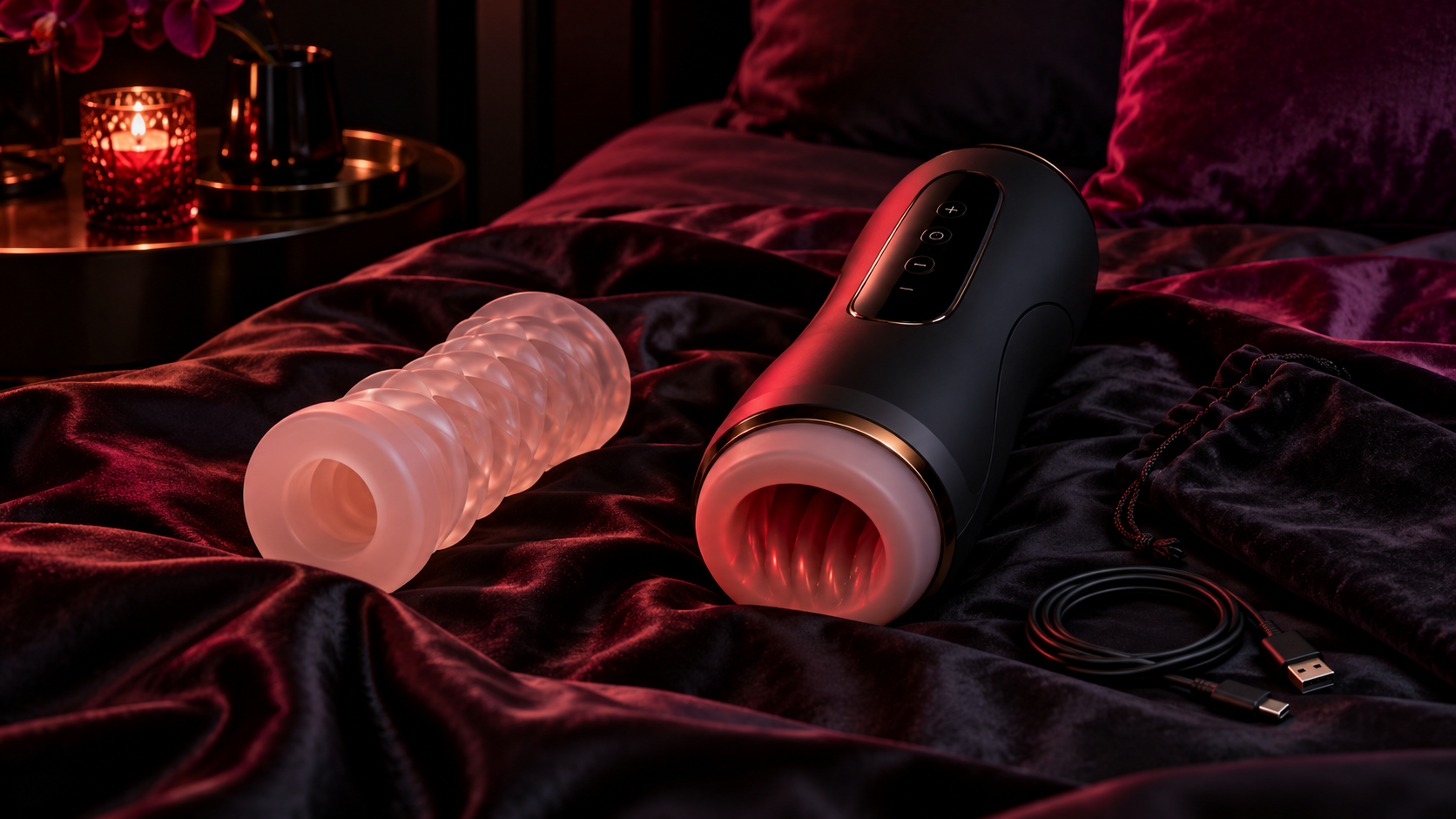
If you value affordability, quiet use, and easy cleanup, manual wins. If you specifically want powered motion and do not mind more maintenance, automatic can feel more luxurious and immersive.
Manual sleeves keep things simple. Automatic strokers add power, settings, and a little gadget lust. The better choice depends less on hype and more on how you like to play, clean up, and store your toys.
| Buying factor | Manual stroker | Automatic stroker |
|---|---|---|
| Price | Usually the lower-cost entry point | Usually higher because you are paying for the motor, controls, and housing |
| Setup | Open, lube, enjoy | Charge it, learn the controls, sometimes pair an app |
| Noise | Generally quiet | Can range from subtle hum to very noticeable motor noise |
| Cleaning | Mostly one sleeve to wash and dry | Often multiple pieces, charging ports, and special care around electronics |
| Travel and storage | Compact and discreet | Bulkier, heavier, and may need a pouch plus charging cable |
| Best for | People who want easy, low-fuss pleasure | Buyers who want powered stimulation and a more gadget-driven experience |
The sexy short answer
A manual sleeve feels intimate and direct. You are in total control of pressure, rhythm, and pace, which makes it easy to slow down, speed up, or change angles the second your body asks for it. That simplicity is part of the charm. There is almost no learning curve, and a good sleeve can still feel deliciously indulgent when the texture, firmness, and fit are right.
An automatic stroker is about surrendering a little control in exchange for a more machine-assisted experience. The appeal is not just motion. It is the mood. A good powered device can feel like a whole event: charged up, queued up, lights low, toy ready, cable tucked away. If that sounds exciting rather than annoying, automatic starts to make sense.
What matters more than the product page glamor shot
Look past the bold claims and check the practical details. Does the sleeve material seem realistic to clean? Can you remove the insert? Does the manufacturer explain drying time, replacement availability, and what cleaners are safe? These boring details are what decide whether your new toy still feels sexy after the third use.
Noise and storage are the two big reality checks. Plenty of automatic units are marketed as discreet, but "discreet" is not the same as "inaudible." If privacy is a real concern, manual products are still hard to beat. They also fit more easily into a nightstand or travel pouch.
Who should buy which one
Choose manual if you are a first-time buyer, want to spend less, or prefer a toy that is simple to wash, dry, and replace. Manual is also a smart move if you are still figuring out what textures and tightness levels you like, because experimenting is cheaper.
Choose automatic if you already know you enjoy strokers and specifically want a powered sensation, a more immersive session, or a hands-lighter experience. In other words, buy the motor because you truly want the motor, not because more features sound automatically better.
- Best manual signs: clear sleeve material, realistic sizing details, easy cleaning instructions, and a case that actually opens up for drying.
- Best automatic signs: removable sleeve, well-explained controls, honest runtime details, a charger type you recognize, and a warranty that covers defects.
Mistakes to avoid
Do not buy purely on the promise of being "the most realistic" or "the strongest ever." Those are emotional triggers, not technical information. Focus on sleeve access, material clarity, size, and care instructions.
Do not underestimate cleanup fatigue. A toy that looks thrilling but becomes a chore after every use tends to end up forgotten in a drawer.
Shopping checklist
- Confirm the exact sleeve material and whether it is removable.
- Read the cleaning instructions before checkout, not after delivery.
- Check dimensions and storage size, especially if discretion matters.
- Look for a real warranty and replacement-part information.
- If you need quiet use, assume a motor will be heard unless proven otherwise.
The smartest buy is the one you will actually enjoy and keep using. For most shoppers, manual is the easiest first purchase. For buyers craving a richer, motorized ritual, automatic can absolutely be worth the splurge.
Ownership cost: the part most product descriptions skip
Powered models add more than a motor. Depending on the design, they can add batteries, charging cables, proprietary sleeves, seals, noise and additional cleaning time. A manual design has fewer points of failure but can still be a poor buy if the internal material is difficult to wash or replacement parts are unavailable.
On a phone, swipe the comparison table sideways to see every column.
| Ownership factor | Manual | Automatic |
|---|---|---|
| Upfront cost | Often lower | Often higher, with greater model variation |
| Power | None | Battery, cable, controls and possible replacement parts |
| Cleaning | Usually simpler if sleeve detaches | Check which components separate from electronics |
| Noise and storage | Often quieter and compact | Check sound claims and dimensions for the model |
| Long-term costs | Sleeve replacement where applicable | Potential proprietary sleeves, chargers or repairs |
Before purchasing, find the actual replacement-sleeve price, whether the manufacturer sells spares, the warranty terms, and any cleaning restrictions. A generic claim that a product is “rechargeable” is not evidence of a reliable motor or serviceable battery.
FAQ
Manual models often have fewer parts to clean and dry. For powered models, check whether the sleeve is removable and follow the manufacturer’s instructions for electronics.
Compare sound, charging and run time, replacement sleeve availability, warranty details, and the total size of the device.