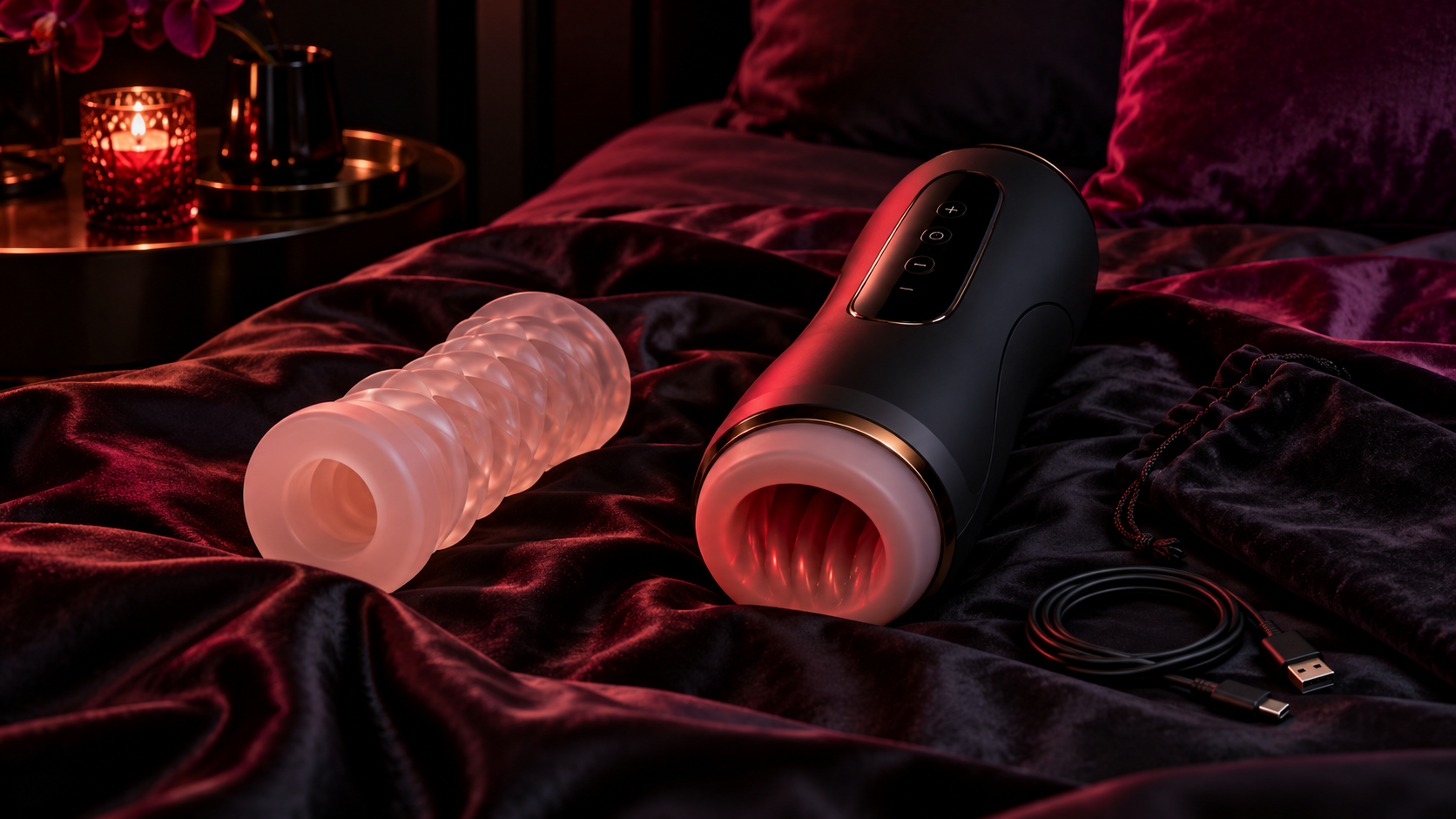
Rechargeable toys are usually the better long-term choice for frequent use. Battery-powered toys can still be convenient for travel, backup use, or shoppers who prefer not to worry about charge cycles.
Power style sounds like a boring spec until a toy dies at the wrong moment or eats through batteries faster than expected. Here is how rechargeable and replaceable-battery toys really compare.
| Buying factor | Rechargeable toy | Replaceable-battery toy |
|---|---|---|
| Everyday convenience | Charge ahead of time and reuse | Swap batteries when needed |
| Long-term cost | Usually lower over time if used often | Batteries can add up with regular use |
| Travel flexibility | Needs the right cable and enough charge | Easy if you pack spare batteries |
| Eco footprint | Often better than repeatedly discarding batteries | Generates ongoing battery waste |
| Best for | Frequent users and people who want a more premium feel | Occasional use, emergency backups, or simple travel setups |
Why rechargeable became the premium default
Rechargeable toys feel more modern for a reason. They often support stronger motors, sleeker designs, and a less disposable overall feel. If you use a toy regularly, being able to plug it in and keep going is usually more elegant than feeding it fresh batteries every few sessions.
They also reduce the low-key irritation of realizing you have the perfect mood and no power left in the drawer. As long as you build a habit of topping them up after use, rechargeable formats can feel effortlessly ready.
Why battery-powered still has a place
Replaceable-battery toys are not automatically cheap or outdated. In some categories they remain lighter, simpler, or more travel-friendly. If you want something tucked away as a backup or packed discreetly without bringing a charger, a battery toy can still be the practical little hero.
The trade-off is long-term friction. Batteries cost money, create clutter, and are one more thing to keep in stock. Heavy users usually notice that annoyance pretty fast.
What reliability really means
Rechargeable does not automatically mean more reliable. Ports, seals, and charging systems can fail. Battery-powered toys can also suffer from poor contacts, weak lids, or inconsistent performance as batteries drain. That is why build quality and warranty matter more than the power type alone.
Read whether the charging cable is proprietary or standard. A toy that needs a hard-to-replace custom cable is less convenient than one using a common connection you already own.
- Choose rechargeable if you expect frequent use and want a more polished ownership experience.
- Choose battery-powered if you want a simpler, occasional-use toy or a travel-friendly backup.
Buying tips that prevent frustration
Look for runtime expectations, charge times, waterproof care instructions, and whether the battery compartment feels secure or flimsy. Think about how you actually live. Are you great at charging devices, or do you constantly forget cables? Your habits matter here.
A toy that fits your routine will always feel sexier than a technically better toy that never feels ready when you are.
Shopping checklist
- Choose rechargeable for frequent use.
- Choose replaceable batteries for backups or travel simplicity.
- Check cable type, runtime, and charging time.
- Read warranty coverage and waterproof care notes.
- Make the decision based on your habits, not just the spec sheet.
The more often you plan to use a toy, the stronger the case for rechargeable becomes. If you mainly want simplicity, portability, or a drawer-ready backup, batteries still have their place.
FAQ
Rechargeable devices reduce disposable battery purchases but may have sealed batteries that wear out. Replaceable-battery designs can be easier to power away from an outlet.
No. Power source and water-resistance are separate specifications. Check the exact device rating and the instructions for the charging port.