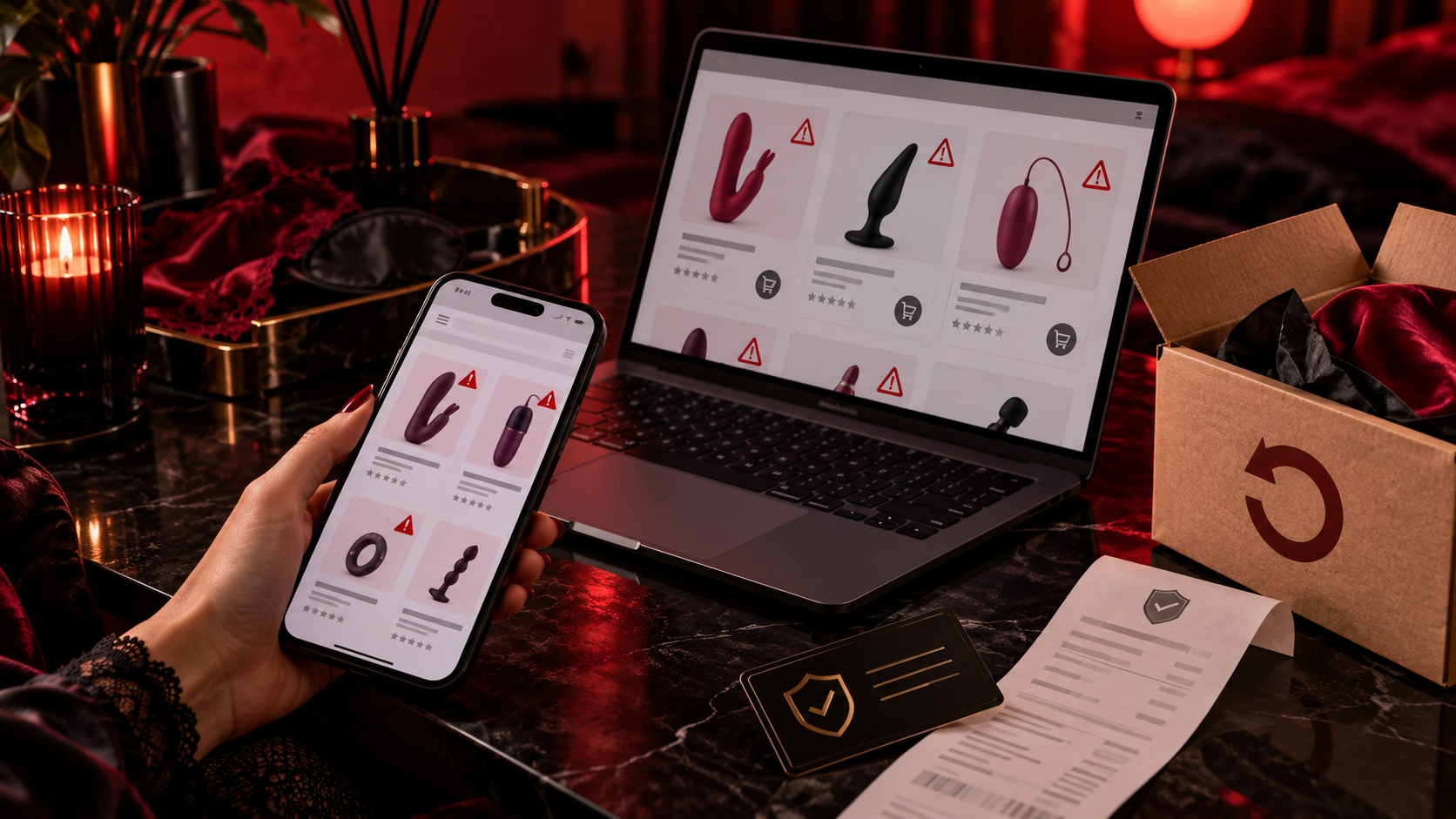
A gorgeous product page can hide a sloppy listing. In adult shopping, that can mean cheap knockoffs, unsafe materials, or a product that looks nothing like what arrives.
The quickest way to waste money is to shop only with your eyes. Counterfeit and misleading listings are designed to create urgency, not confidence.
A smart buyer slows down for two minutes and checks the listing like a detective: material clarity, seller credibility, image quality, return policy, and whether the description seems written by a real brand or by a keyword blender.
| Red flag | Why it matters |
|---|---|
| No exact material listed | You cannot verify body safety or cleaning expectations. |
| Over-edited or inconsistent photos | May indicate stolen images or a product that will not match what arrives. |
| Too-good-to-be-true price | Can signal knockoffs, poor build quality, or zero post-purchase support. |
| Vague warranty or return policy | Leaves you with little recourse if the product arrives defective. |
Read past the sales pitch
If the description is packed with superlatives but short on specifics, be cautious. You want materials, dimensions, charging method, waterproof claims that mean something, and clear care instructions. "Premium" and "luxury" are not specs.
The same goes for reviews. A wall of short, generic praise can be less convincing than a smaller number of detailed comments that mention real strengths and annoyances.
Photo quality tells a story
Counterfeit and misleading listings often use a strange mix of polished hero shots and low-quality detail photos, or they recycle the same image set across multiple seller names. If the scale of the toy feels impossible to judge or the interface details are oddly blurred, stop and look closer.
You are not just buying the fantasy in the photography. You are buying the object that will arrive at your door.
Seller and support matter
Who is selling the product? Is there a clear company identity, or just a marketplace storefront with little history? Is there a warranty page? Can you tell what happens if the device fails after a few uses?
Adult products sit close to the body. That makes seller trust far more important than it would be for a random decorative item.
- Green lights: precise dimensions, materials, clear photos, transparent support policies, and a credible seller presence.
- Red lights: missing specs, suspicious discounts, vague promises, and a pile of copy that sounds generic or machine-spun.
How to protect yourself
Buy from retailers that explain their return logic and brand partnerships. Keep receipts, save the product page, and do not rush because a countdown timer says you should.
The sexiest purchase is the one that arrives exactly as promised.
Before you buy
- Verify exact material and dimensions.
- Look for consistent, credible photos.
- Be suspicious of deep discounts without context.
- Check seller support, returns, and warranty information.
- If a listing feels vague, move on.
The adult category should feel exciting, not shady. A little skepticism up front saves a lot of disappointment later.
A seven-signal authenticity check
For intimate products, a counterfeit can be more than an expensive disappointment: poor finishing, undisclosed materials or misleading electrical specifications can change the safety and comfort picture. No single warning proves fraud, but several together should make you reconsider a purchase.
- Brand and model: does the maker list the exact model number, not just a lookalike name?
- Contact material: is the actual material specified beyond “body-safe” or “premium blend”?
- Seller identity: is there a real business address, support path and usable return policy?
- Pricing: is a dramatic discount explained, or simply attached to an urgent timer?
- Images: do packaging and product photos match the official manufacturer's design?
- Technical details: do power, battery, sealing and care claims agree with the manual?
- Payment: can you pay through a normal protected checkout without unusual off-site transfers?
What to do with a suspicious order
Do not use a product with unknown materials, sharp seams, unsafe wiring, or a damaged charging system. Keep the order page, receipt, packaging and communications. First ask the seller for a documented resolution; if needed, use the payment provider's dispute process. Avoid publishing identifying payment details in reviews.
High-quality product photography is not independent evidence of authenticity. The strongest listings make manufacturer identification, specifications and after-sale support easy to verify.
FAQ
Compare the exact model name, packaging information, seller identity, manufacturer warranty eligibility, and product materials against reputable source information.
No. Discounts can be legitimate, but an unusually low price combined with inconsistent photos, unclear seller details, or missing warranty information is worth investigating.