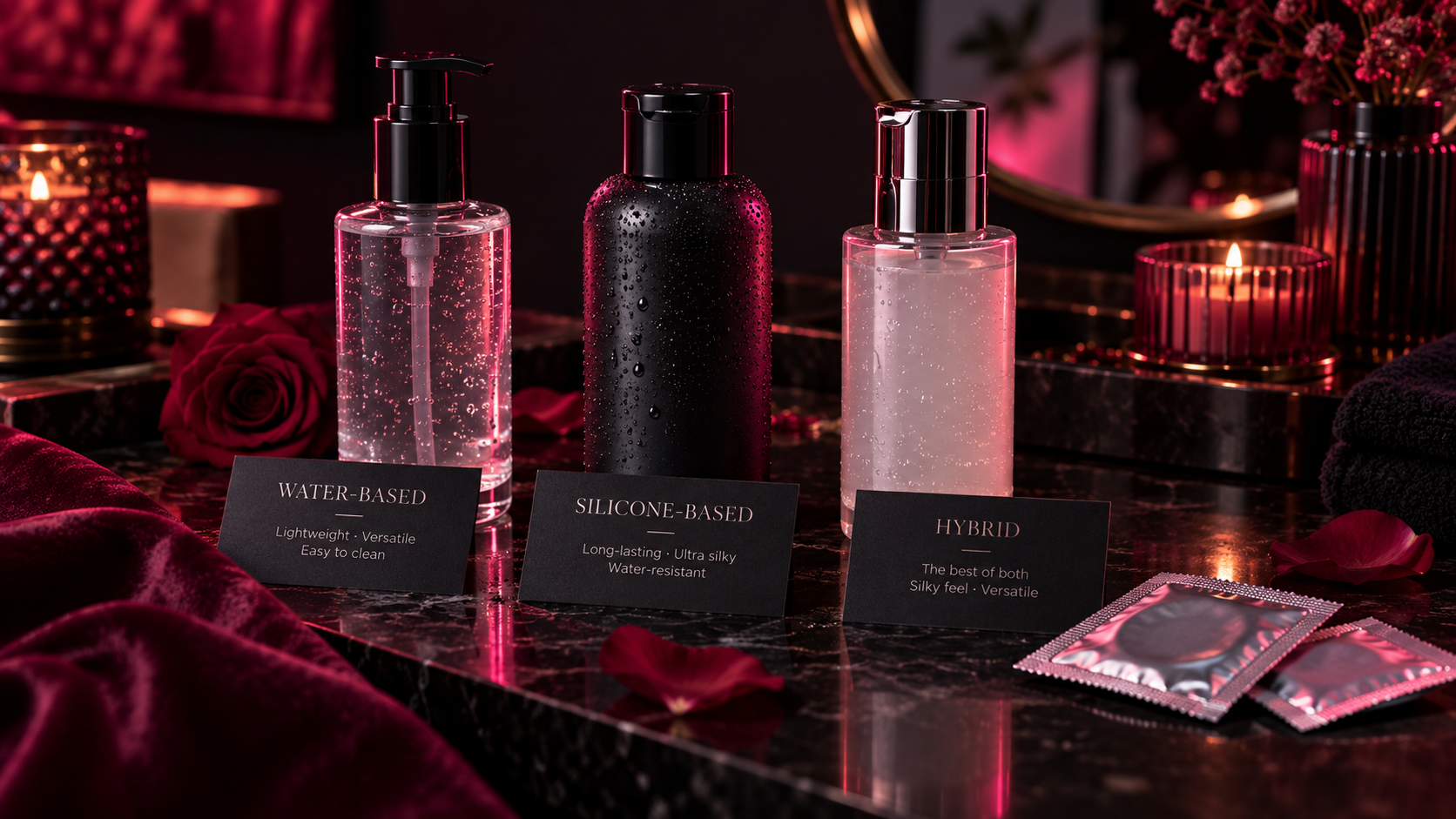
The right condom-and-lube pairing should feel smooth and reassuring. The wrong one can create friction, confusion, or a mismatch the brand should have warned you about more clearly.
Condoms and lube should work together, not against each other. The goal is comfort, ease, and confidence. That starts with using a pairing that is appropriate for the materials involved.
When you are unsure, a quality water-based lubricant is usually the simplest default. It is the least dramatic, most broadly useful place to begin.
| Common pairing question | Safe takeaway |
|---|---|
| Not sure what lube to use with condoms? | Water-based is usually the easiest starting point. |
| Thinking about silicone-based lube? | Check the condom and product guidance carefully. |
| Using a new product combo? | Read both labels instead of assuming compatibility. |
| Shopping fast online? | Do not skip the material details on either product. |
Why compatibility matters
A good lube reduces drag and helps things feel smoother and more comfortable. But not every formula belongs with every setup. Material guidance exists for a reason, and it is worth respecting.
This is one of those topics where boring diligence creates a much sexier outcome: less worry, more relaxation, and a setup you can trust.
The case for water-based as the default
Water-based lubes are broadly recommended because they tend to be versatile and easy to clean. For many shoppers, that makes them the best all-purpose choice when condoms are part of the plan.
Their one trade-off is longevity. You may need to reapply, but that is a small price for flexibility and simplicity.
Why labels deserve your full attention
Do not assume that because a lube feels premium or because a condom is widely sold, the pairing is automatically ideal. Read the instructions. If the brand guidance is missing, vague, or contradictory, that is a sign to be cautious.
Compatibility is a label-reading problem before it becomes a bedroom problem.
- Best practice: choose simple, clearly labeled products and respect the manufacturer guidance.
- Worst practice: winging it because the bottle looked luxe and the package looked familiar.
Practical buying tips
Keep a reliable, clearly labeled bottle on hand instead of relying on whatever is cheapest or most decorative. When you find a combination that feels comfortable and trustworthy, there is real value in repeatability.
The less guesswork involved, the easier it is to stay in the moment.
Before you buy
- Use water-based lube as your safest starting point when unsure.
- Read both the condom and lube guidance.
- Do not assume premium branding equals compatibility.
- Replace guesswork with clear labels.
- Prioritize comfort and confidence over novelty.
Compatibility is not a mood killer. It is what lets the mood stay easy.
Choose by condom material first
Condom compatibility is a material question, not a brand-prestige question. Before choosing lubricant, identify the material printed on the condom package. Latex, polyisoprene and polyurethane should not be treated as interchangeable without reading their instructions.
On a phone, swipe the comparison table sideways to see every column.
| Condom material | Water-based lube | Silicone-based lube | Oil-based lube |
|---|---|---|---|
| Latex | Generally compatible | Generally compatible | Avoid: oils can weaken latex |
| Polyisoprene | Generally compatible | Generally compatible | Do not assume safe; check condom instructions |
| Polyurethane | Generally compatible | Generally compatible | May be compatible, but follow the product label |
| Other/nonstandard materials | Follow the exact condom manufacturer's compatibility instructions | ||
Check toy compatibility separately
A lubricant that is compatible with your condom is not automatically compatible with your toy. Some silicone-based lubricants can damage some silicone toys; water-based products are the simpler default when both condom and toy must be compatible. Hybrid products may contain silicone even when their front label emphasizes water.
The two-label purchase test
- Find the condom's material, expiry date, and lubricant instructions.
- Read the lubricant ingredient and compatibility statement; oil-based household products are not a substitute for condom-safe lube.
- If a toy is involved, check the toy manufacturer too. Don't improvise when labels conflict.
Use a new condom each time; extra lubricant cannot correct a damaged, expired, or incorrectly used condom. These are general compatibility guidelines, not a substitute for the instructions on the products you own.
FAQ
No. Oil-based substances can weaken latex. Check lubricant packaging and the condom maker’s compatibility information.
Yes. Toy compatibility and condom compatibility are different questions, so check both manufacturers’ guidance for the exact products used.