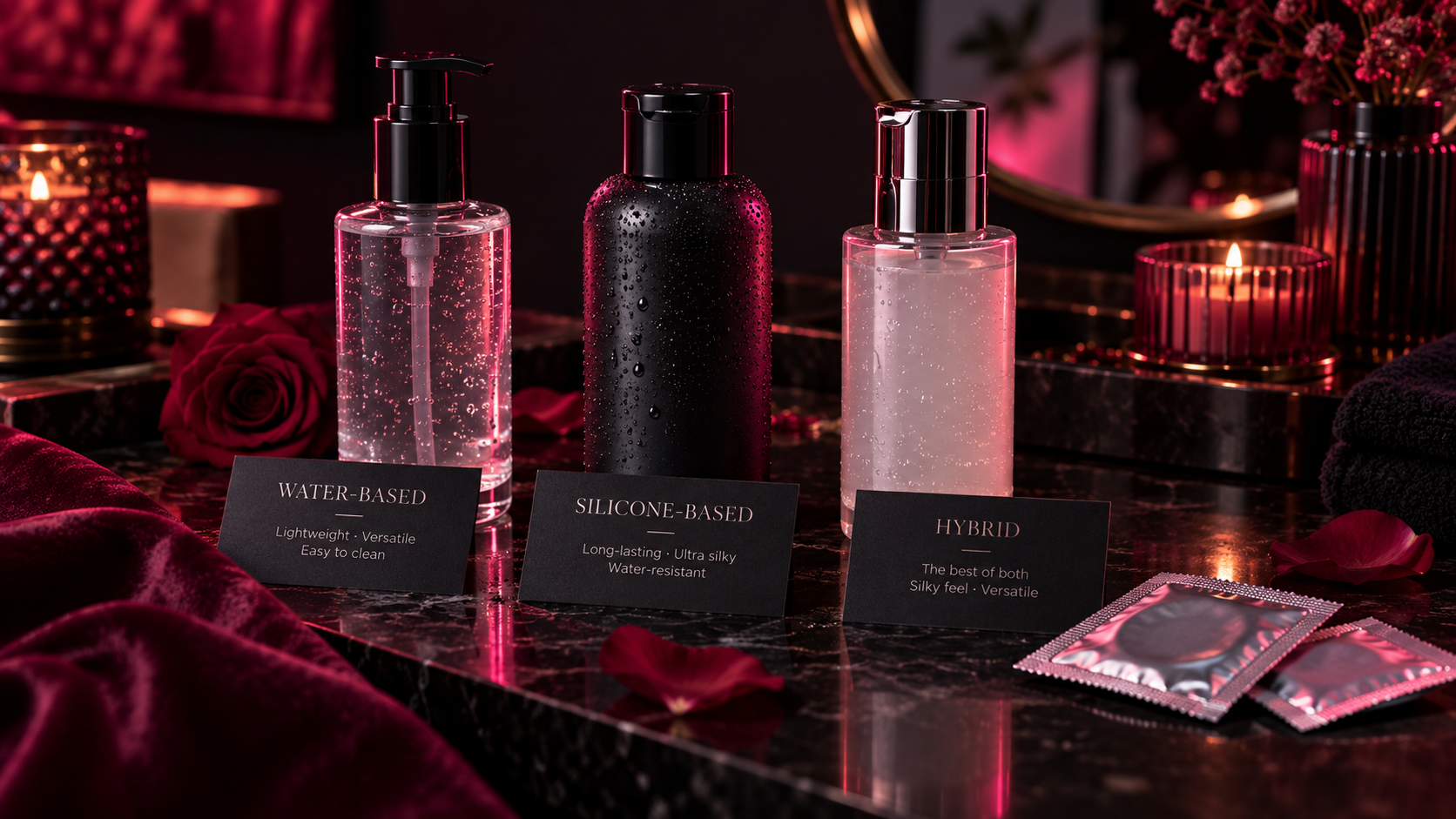
Sensitive skin does not mean boring shopping. It just means the bottle needs to earn your trust before it earns a spot on your nightstand.
If your skin tends to react, the right lube can feel wonderfully easy and the wrong one can ruin the whole mood. That is why shopping by label matters more here than shopping by packaging.
Your goal is not to find a miracle bottle. It is to find a formula with a gentler, more transparent profile and a texture you genuinely enjoy using.
| Shopping priority | Why it helps |
|---|---|
| Transparent ingredient list | Lets you assess the formula instead of guessing |
| Simple formula | Often easier for sensitive users to tolerate |
| Fragrance awareness | Added fragrance can be a concern for some buyers |
| Patch-test mindset | Helps you notice issues before a fully committed use |
What to look for first
A clear ingredient list is a green flag. Brands that respect sensitive shoppers usually explain the formula rather than hiding behind beauty language. If you cannot easily see what is in the bottle, start skeptical.
Many shoppers with sensitivities prefer straightforward water-based options as a starting point because they are easier to understand and easier to clean away.
Why hype can get in the way
Words like "natural," "clean," or "ultra-pure" are not enough. They may signal positioning, but they do not replace reading the actual ingredients or understanding whether a formula is fragranced, heavily preserved, or blended with components you already know do not suit you.
The prettiest bottle in the drawer is still a bad buy if it makes your skin unhappy.
How to test more thoughtfully
If you are especially cautious, start with a small amount and see how your skin responds. That approach may not sound glamorous, but it is what protects the glamour later.
Keep notes if you try more than one formula. Over time, you may notice that certain textures or ingredient styles simply work better for you.
- Helpful habits: choose simpler formulas, avoid blind trust in buzzwords, and favor transparency.
- Worth remembering: a gentler formula still needs to feel good, not just look safe on paper.
When to move on from a bottle
If a formula feels irritating, sticky in an unpleasant way, or consistently leaves you uncomfortable, do not keep trying to make it happen. The sunk-cost fallacy has no place on your nightstand.
Pleasure is supposed to feel easier, not more complicated.
Before you buy
- Read the ingredient list before buying.
- Prefer clarity over vague purity claims.
- Default to straightforward formulas if you are unsure.
- Test cautiously if you know your skin is reactive.
- Move on quickly if a product does not suit you.
Sensitive-skin shopping is really trust-based shopping. When the formula is transparent and the feel is right, the whole experience gets easier.
How to read an ingredient label when irritation is a concern
No bottle can promise universal skin compatibility. “Hypoallergenic,” “natural,” and “sensitive” are not a substitute for a full ingredient list and clear usage instructions. If a lubricant has caused burning or a rash before, compare its ingredients with alternatives rather than simply switching to another bottle with similar advertising.
On a phone, swipe the comparison table sideways to see every column.
| Label field | What to ask |
|---|---|
| Fragrance or flavor | Do you need it? If you have reacted to fragrances, a simpler formula may be preferable. |
| Preservatives and other additives | Does the manufacturer give a complete list for comparison? |
| Water, silicone, or hybrid base | Is it compatible with condoms and any toys involved? |
| Use instructions | Does the label specify intended use, warnings and when to discontinue? |
If a product irritates
Stop using it and wash as directed with water if appropriate. Do not repeatedly expose sensitive tissue to a product just to “get used to it.” If symptoms are persistent, severe, or recurring, a clinician can help distinguish irritation from an infection or another cause. A small skin patch check cannot guarantee safety on mucous membranes.
For latex condoms, water- or silicone-based lubricants are the usual compatible categories; avoid oil-based products because they can damage latex. If you're also using a toy, check its instructions independently.
FAQ
No. A fragrance-free label rules out one potential concern, but individual responses vary and ingredient lists still matter.
Stop use, follow product guidance, and seek appropriate medical advice if symptoms persist or are concerning.