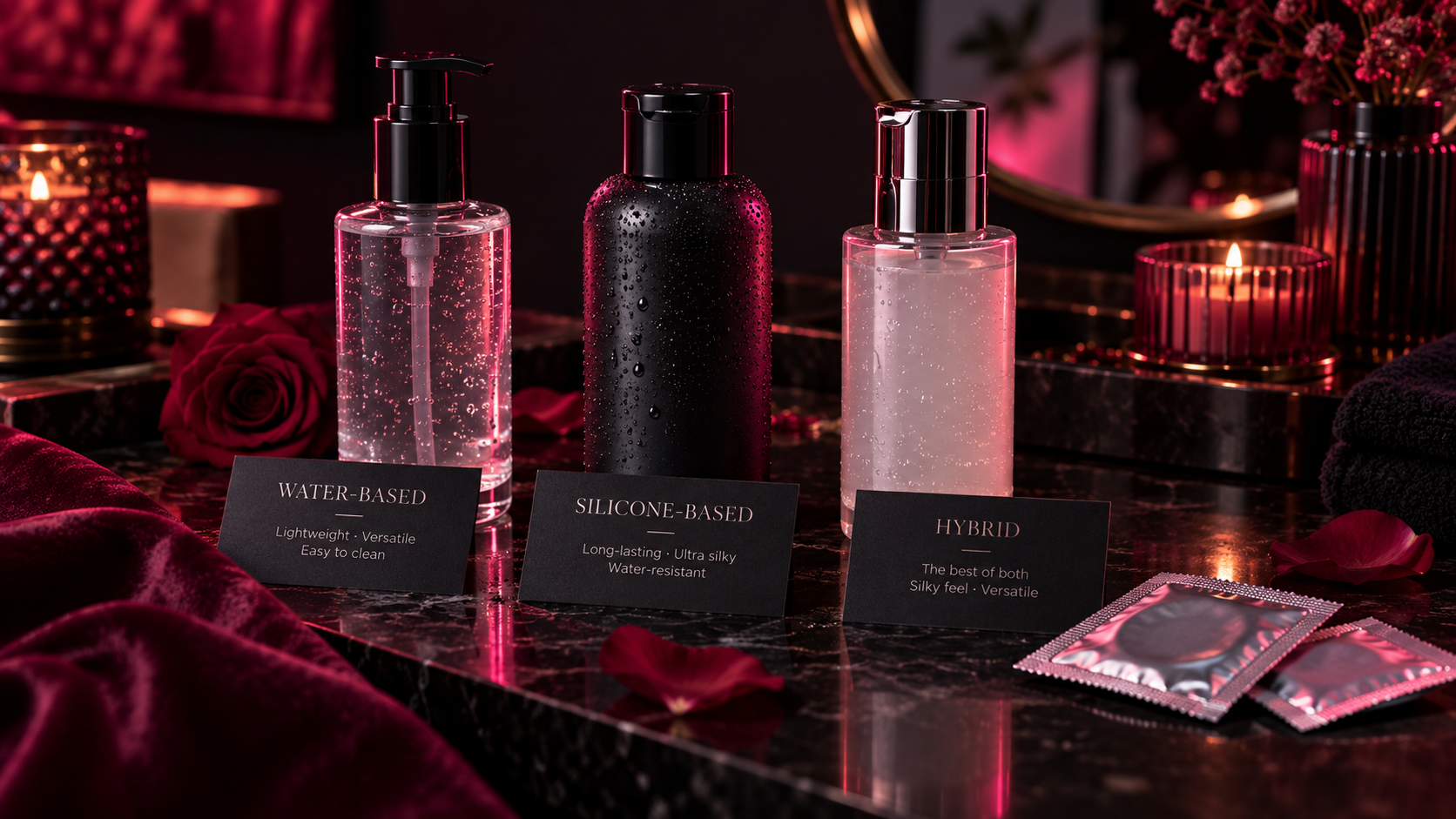
Water-based is the most versatile starting point. Silicone-based lasts longer and feels silkier. Hybrid blends try to split the difference, but they still need a careful compatibility check.
Lube can make a good experience smoother, hotter, and more comfortable, but the wrong formula can leave you sticky, irritated, or disappointed. Here is how the three main categories actually differ.
| Lube type | What it feels like | Best use case | Watch-outs |
|---|---|---|---|
| Water-based | Light to medium slip, easy to rinse | Most people, most condoms, and most toy materials | Can dry out sooner and need reapplication |
| Silicone-based | Silky, cushiony, long-lasting | Longer sessions, shower play, and situations where you want more glide | Not always toy-friendly, especially with some silicone toys |
| Hybrid | Smoother than many water-based formulas, lighter than full silicone | People who want longer slip without committing to a full silicone texture | Ingredients vary widely, so you must check compatibility |
Why water-based is the default recommendation
Water-based lube earns its reputation because it is flexible, easy to clean, and usually the least dramatic choice. It plays well with a broad range of condoms and toys, rinses off sheets and skin more easily, and feels friendly to first-time buyers who do not want to decode a chemistry set on day one.
That said, easy does not always mean perfect. Some water-based formulas start slick and then fade into tackiness if the room is warm or the session is long. That is not a deal-breaker, but it does mean reapplying is normal, not a sign you bought the wrong product.
Why people fall in love with silicone
Silicone-based lube is the one that gets described as luxe for a reason. It tends to stay slippery much longer and can feel softer, silkier, and more enveloping on the skin. If you hate stopping to reapply, this is usually the first category worth looking at.
The catch is compatibility. Some silicone toys and silicone lubes do not play nicely together, and not every brand gives the same level of clarity about that. When in doubt, follow the toy maker's instructions or do not pair the two at all.
Where hybrids fit in
Hybrid lubes usually mix water with a smaller amount of silicone to create a more elegant glide than basic water-based formulas. The appeal is obvious: a texture that feels smoother and lasts longer without going fully into the heavier silicone territory.
The challenge is that hybrid formulas are not a single standard. One bottle may behave almost like water-based, while another feels much closer to silicone. That means labels matter. Ingredients matter. And sweeping assumptions do not.
- Buy water-based if you want a safe, versatile everyday bottle.
- Buy silicone-based if you prioritize long-lasting slickness and know it suits your use case.
- Buy hybrid if you want more glide than water-based but still want something that feels lighter than a full silicone formula.
What to check on the label
Marketing words like "natural," "ultra-smooth," or "premium" do not tell you much. Instead, read the ingredient list, note whether the formula is marketed for sensitive skin, and check whether the brand specifically addresses toy compatibility and cleanup.
Also think about the finish. Some people want something silky and invisible. Others want more cushion. Others care most about easy cleanup. Lube is intimate, so preference matters as much as chemistry.
Shopping checklist
- Start with water-based if you are unsure.
- Use the toy manufacturer's guidance before pairing silicone lube with silicone toys.
- Expect reapplication with many water-based formulas.
- Read ingredient lists if you have fragrance or sensitivity concerns.
- Prioritize how the formula feels in real use, not just how it is marketed.
The sexiest lube is not the one with the flashiest bottle. It is the one that matches your body, your toys, and the kind of session you actually want.
A more useful compatibility-first shopping matrix
The most useful distinction is not simply which lubricant feels slickest. Ask what it will touch: a latex condom, a silicone toy, skin, or some combination. Use the label and the toy maker's instructions to resolve uncertainty before you buy.
On a phone, swipe the comparison table sideways to see every column.
| Your situation | Sensible starting point | What to confirm |
|---|---|---|
| Latex condoms | Water- or silicone-based | Avoid oil-based ingredients; check package guidance |
| Silicone toy | Water-based | Silicone or hybrid lube may conflict with the toy material |
| Need easy cleanup | Water-based | Dry-down, residue, and whether reapplication is acceptable |
| Want longer-lasting glide | Silicone-based | Condom and toy compatibility; laundering considerations |
| Considering hybrid | Read full ingredients first | Whether it contains silicone and how much; maker guidance |
Don't mistake ingredient marketing for safety data
“Natural,” “clean,” and “silky” are sensory or marketing descriptions, not proof that a formula is compatible with every barrier or toy. Fragrance-free does not guarantee that nobody will react to it. For persistent burning, pain, rash, or other symptoms, stop using the product and consult a clinician.
Cost-per-use is more helpful than bottle price
A large inexpensive bottle may cost more in practice if it dries quickly and you need frequent reapplication; a smaller silicone-based bottle may last longer but could be wrong for the toy you own. Compare price per fluid ounce, expected use, cleaning, and whether you'll need two separate formulations. Never base this decision on a retailer's unverified “best for everything” claim.
For the two-material check, see the condom-and-lubricant compatibility checklist.
FAQ
Check the specific toy manufacturer’s lubricant guidance. Water-based options are often the simplest starting point, while some silicone-based formulas may not be recommended for certain silicone toys.
Texture and longevity vary by formulation and use. Product ingredient and compatibility information matter more than a single marketing adjective.